
Lenten Communion Reflection
2016
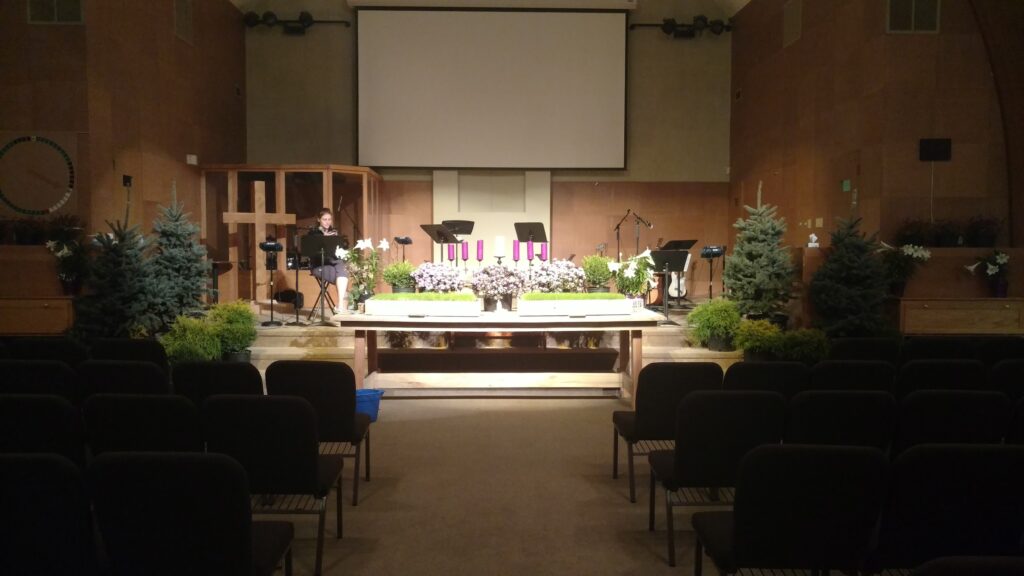
As part of a Lenten communion reflection series that invited congregants to share each Sunday, I shared my reflection on the movements of death and resurrection, humility, and transformation, using the metaphors of baptism and soil, and weaving biblical narrative throughout, with narrative arcs found in many stories. As a staff member at Common Ground Christian Church, I coordinated the communion reflection series, shaping its theme of transformation and inviting participants to share their personal stories and reflections.
Medium / Project Type
Skills Used
Toolkit
Project role(s)
Values / Ethos
Humility as Transformation
The reflection frames humility, loss of control, and life’s humbling experiences as the generative substance of renewal.
Storytelling as an Accessible Way of Knowing
Personal narrative, storytelling, and metaphor are used to make certain truths more accessible and more intuitively known.
Communal Belonging & Hospitality
By inviting all listeners to the communion table, united by shared humanness, the reflection embodies a posture of welcome, compassion, and shared ground.
Audio
Transcript
Good morning, my name is Andrew Fritz, and happy Valentine’s Day. Has anybody told you that today?
When I was 10 years old, I had two girlfriends named Kyla and Ashley, which was terrifying because on Valentine’s Day, I mean, I’d give them two gifts, and it was even more terrifying because I was terrible at giving gifts, which was affirmed when they both broke my heart.
However, six years ago to this day, or 18 years later, the meaning of Valentine’s Day had been reclaimed, as it was a day in which I had accepted Christ’s unconditional love for me through baptism. And while my journey since then has been beautiful, it hasn’t been all “I love you’s” and candy hearts. There have indeed been some tough parts. In fact, the moment before I was baptized, Jeff Krajewski mentioned that it would only get harder from here. And I think I’m beginning to understand the depth of what he had meant that day.
Similar to our faith journey, baptism has four main movements: birth, death, burial, and resurrection. We stand in the water as our original birth creation. And as we fall, we die to ourselves. Then, buried underneath the water into the unknown, all identity is stripped away from us. At the last moment, we are raised up and made a new creation.
And we can breathe.
This process is how we come to look more like Christ. And to be more like Christ is to know that resurrection is not possible without first dying unto thyself. Death and resurrection coexist. If I am to live life in the Kingdom of Love, I must allow the power I use to control my own narrative to die, because it separates me from you, it separates me from God, and it separates me from knowing my true self. This process of dying to the self is called humility, and its purpose is to humble us.
This process is also intensely represented in Christ’s final days, which Eric had just briefly mentioned, where, after He left the Upper Room, he descends through the valley and lands Himself in the Garden of Gethsemane. He’s then captured, suffers at the hands of the Romans, and is rejected and humiliated. He dies, is buried in a new tomb, and after His resurrection, Mary mistakes Jesus for the gardener, like a plant which no longer resembles its former self as a seed.
You see, in my mind, there is no coincidence that Mary mistook Jesus for the gardener. It is a gardener who knows the process of birth, death, burial, and resurrection better than anyone. The gardener nurtures the soil, plants the seed, watches it grow, only to see that process happen over and over again.
But the gardener is helpless to grow things from seed without an unforeseen power to unleash life from death. The gardener’s task, then, is to nurture the soil by harnessing this process of death with precision. The good gardener will collect kitchen scraps and other dead material and throw them on the compost pile. Over time, this compost transforms into a highly nutritious soil, which we call humus, which is then thrown in the garden and bears good fruit.
I love that the word humus, the decayed matter that creates nutritious soil, comes from the same root words as human and humility. Hum means soil, earth, or ground. All three words have a blessed meaning that intricately roots us as humans to the soil. Even the name Adam means earth. By our very definition, and as descendants of Adam, we are people who inhabit the earth. This makes Jesus’ statements of the meek shall inherit the earth, or when Paul calls Christ the new Adam, all the more profound. I am comforted knowing that the humiliating events of my life create the fertile conditions for new growth. When we are most human, our most humbled, we all stand on common ground – where Christ gleefully meets us and unleashes His resurrection power.
Another one of these places of humility where we come together is at the communion table. There are two tables in the front and two tables in the back, and therefore, all who look to Jesus for God’s grace and mercy are invited to this table as we proclaim His death together. After a moment of reflection, you are welcome.
Acknowledgment: This sermon draws thematic inspiration from Parker J. Palmer’s Let Your Life Speak, especially his reflections on humus, humility, and the generative potential of life’s humbling experiences.