Understanding Landscape Aesthetics for Conservation and Restoration
2025
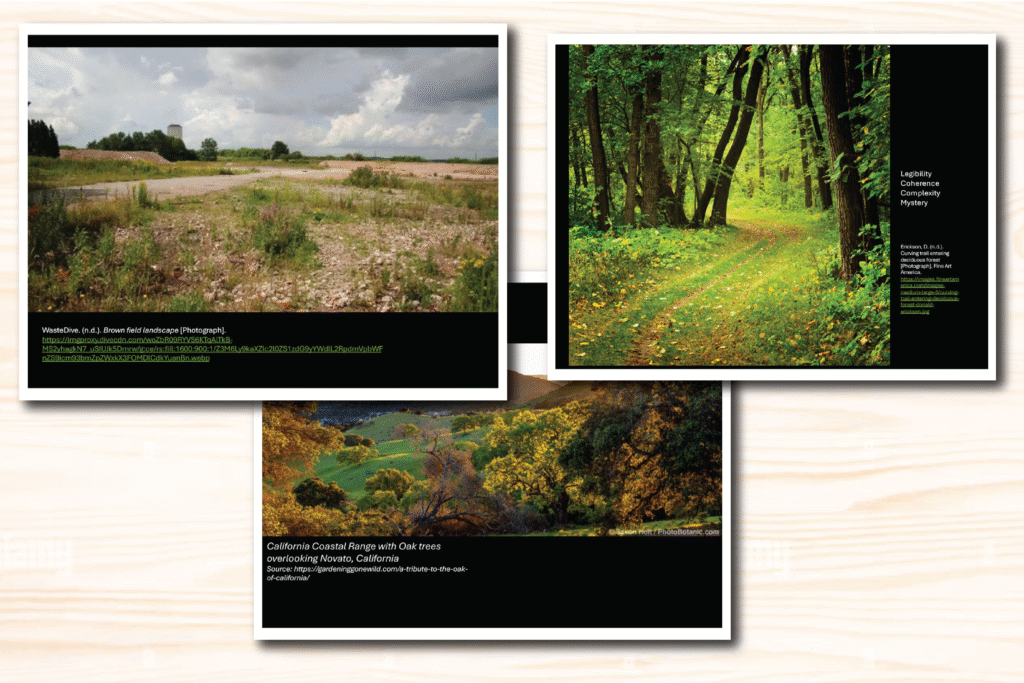
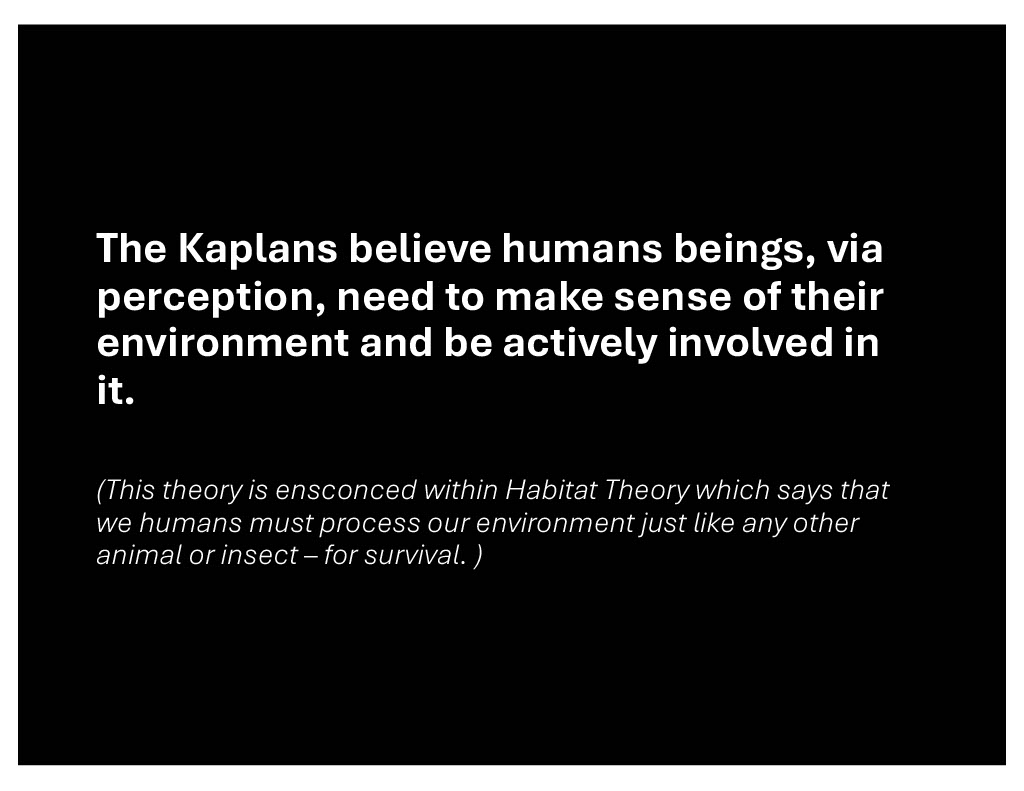
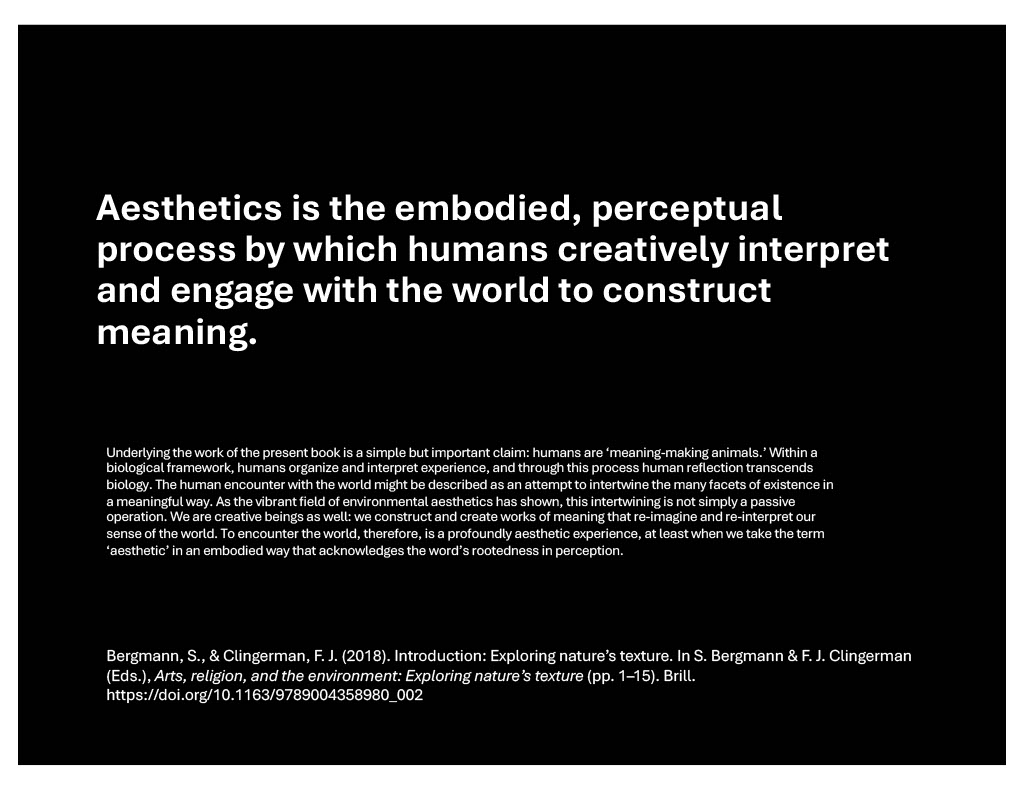
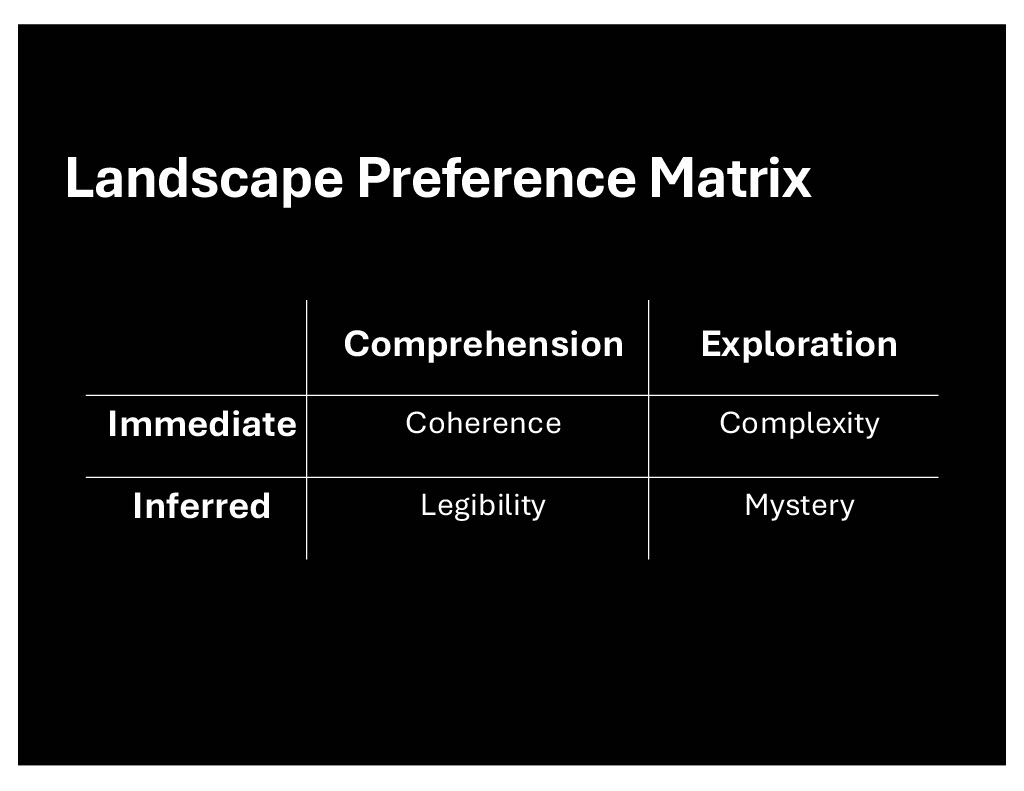
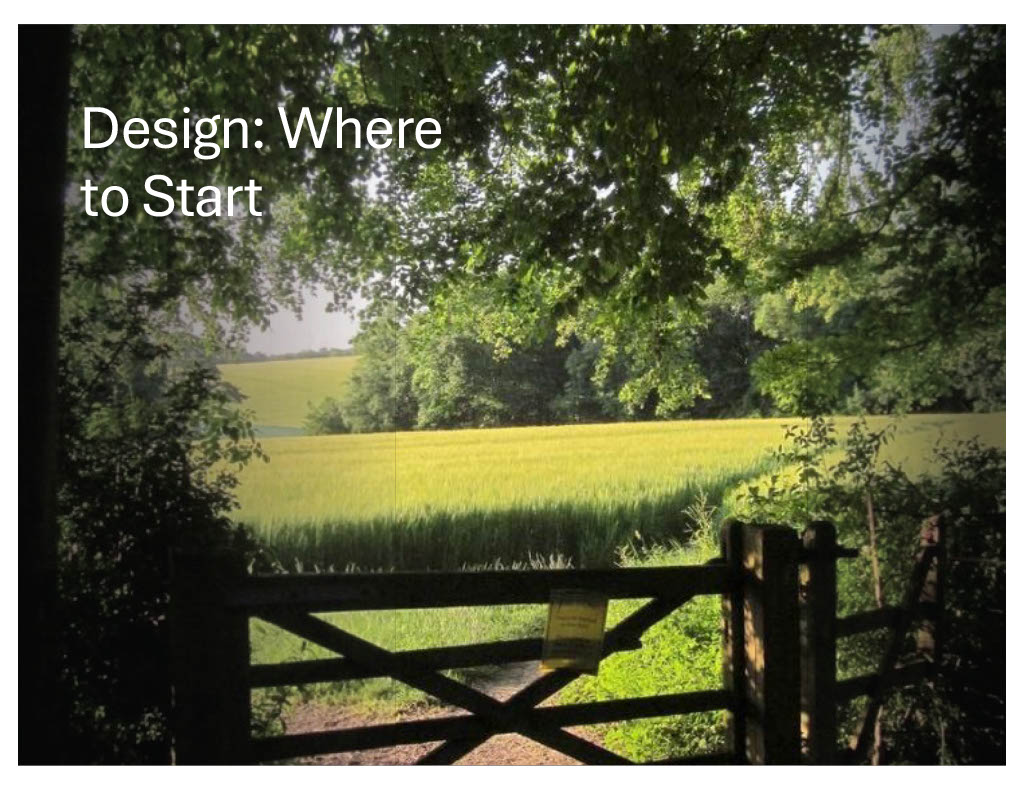
This presentation explored how the inner life, our emotional needs and perceptual tendencies, shape how we relate to landscapes, and how conservation professionals can draw on this understanding to inform their work to be part of ecological and beautiful landscapes and engage emotionally through presence. Using Kaplan’s Preference Matrix, Information Processing Theory, and Prospect–Refuge theory as frameworks for the learning experience, the talk invited participants to notice how aesthetic experience becomes a bridge between outer landscapes and our inner experience. The presentation was impactful. In post-presentation conversations, participants shared how this topic transformed their thinking about conservation and restoration, especially regarding how people will perceive it. This presentation was more academically aligned yet appropriate for the audience.
Medium / Project Type
Skills Used
Values and Ethos
Inner–Outer Bridging
Suggests and advocates that physical landscapes mirror the inner landscape.
Re-membering, Belonging, Connection
Draws attention to the emotional resonance of place, helping practitioners design and restore landscapes where people feel held, safe, and part of a larger ecological community.
Attention
Inspires a new way to observing the landscape; treating aesthetic awareness as a form of care, intelligence, and relational stewardship.
Project Samples